ST. JOHNS COUNTY, FLORIDA INDEPENDENT PUBLIC RESEARCH
SB 686. Amendment 3. Know what’s at stake.
Growth, property taxes and county services. Two major questions for St. Johns County. Examine the records, compare competing arguments and make up your own mind.
For residents, commissioners and staff. Facts, official positions, our analysis and unresolved questions stay clearly labeled.
LAND USE & DEVELOPMENT
SB 686 & agricultural enclaves
What does the law require? Which applications meet those requirements? Where do the evidence, competing interpretations and missing records affect the answer?
What could change for residents? Examine the County’s conditional revenue forecast, likely cuts and fee increases, and a framework for weighing who bears the cost.
SB 686 and Amendment 3 address different questions. The Amendment 3 revenue forecast is not an estimate of losses caused by SB 686. Forecasts are conditional; our decision framework is labeled as a value judgment.
3denied (North Palm Valley; Heritage East and West, reversed Sept. 28)
5withdrawn, three of them refiled smaller
7pending, with County reports due Oct. 1–21
Research current through October 1, 2026. Five filings have full hearing packets; the seven pending ones are screened from the public portal, ordinances and County GIS until their packets post. A denial or approval by the Board is a fact; whether a site meets the statute is a separate question, and we keep them apart.
START HERE · FIVE MINUTES
SB 686, in plain English.
What the law does, how a certification works, and the one question that decides most of the cases now pending. Written for residents; the professional record follows below.
What the law does
Since July 1, 2026, the owner of farm or timber land that is mostly surrounded by development can ask the County to certify it as an agricultural enclave. Certified land can then be built with single-family homes at the density of a neighboring parcel or subdivision, as a conforming use, without the usual plan amendment or rezoning hearings. The law sunsets Jan. 1, 2028.
What a site has to show
As of Jan. 1, 2025 the land must have been undeveloped, in one owner's hands, in bona fide agricultural use for five years, within the acreage caps, and surrounded by enough qualifying land: either 75 percent of its edge against existing or mapped development, or (for sites under 700 acres) 50 percent against land mapped for development and 50 percent inside an urban service area. Parcels across a road or canal count.
How the clock runs
The County has 30 days from receipt to issue a written report, 30 more to hold a hearing, and if it has neither approved nor denied within 90 days, the land is certified by default. A denial needs written findings and can be appealed to circuit court within 30 days.
The question that decides most of it
Four of the seven pending sites can qualify only if the County's Development Area Boundary counts as an "urban service area." County staff said yes in August; a Board majority said no on Sept. 28 and reversed two approvals; the applicants have gone to court. The County's own maps show only two small Urban Service Areas, both near Durbin Creek, far from any pending site. Both readings, side by side.
Where things stand
Sixteen filings since July 1. One certification stands (AFI, 310 acres). Three were denied, including the two Heritage reversals now in litigation. Five were withdrawn, three of them refiled as smaller applications. Seven are pending, on 1,086 acres, with the first County reports due Oct. 1 and the first default date Nov. 30. Every filing, one line each · Report 03: the seven pending filings, mapped.
What a resident can do
Hearings are public and each pending filing will be heard by the Board between late October and December. Hearing packets post on the Clerk's agenda page about a week before each meeting; we read them and update this page the same day. If you own land next to a filing, the perimeter maps in Report 03 show whether your parcel is being counted, and how.
Research current through October 1, 2026. Reports, staff recommendations and Board votes are reported as what they are; whether a site meets the statute is our analysis, labeled as such. Professionals: the evidence register with every finding, calculation and review question is further down, and the complete reports are in downloads.
OUR STANDARD
Facts have sources. Conclusions have limits.
This guide takes no position for or against an applicant or political party. It tests claims against the law and record, presents supported competing arguments, and discloses what remains unknown.
Documented recordOfficial staff findingOur analysisEstimate or scenarioUnresolved
An assertion in an official packet is not automatically an official finding. Fair treatment means consistent evidentiary standards, not equal weight for every claim.
THE PLACE WE SHARE
More than lines on a map.
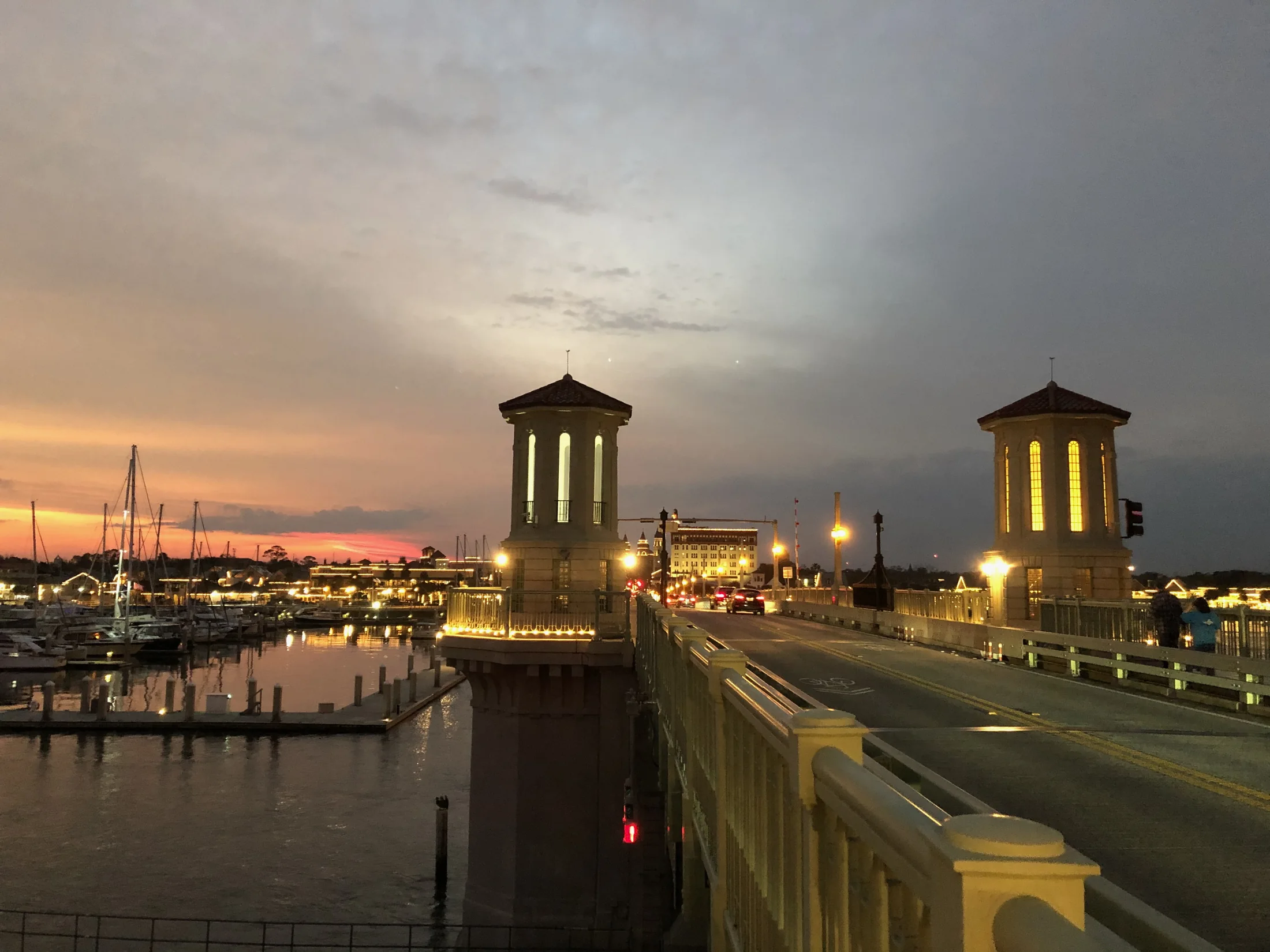
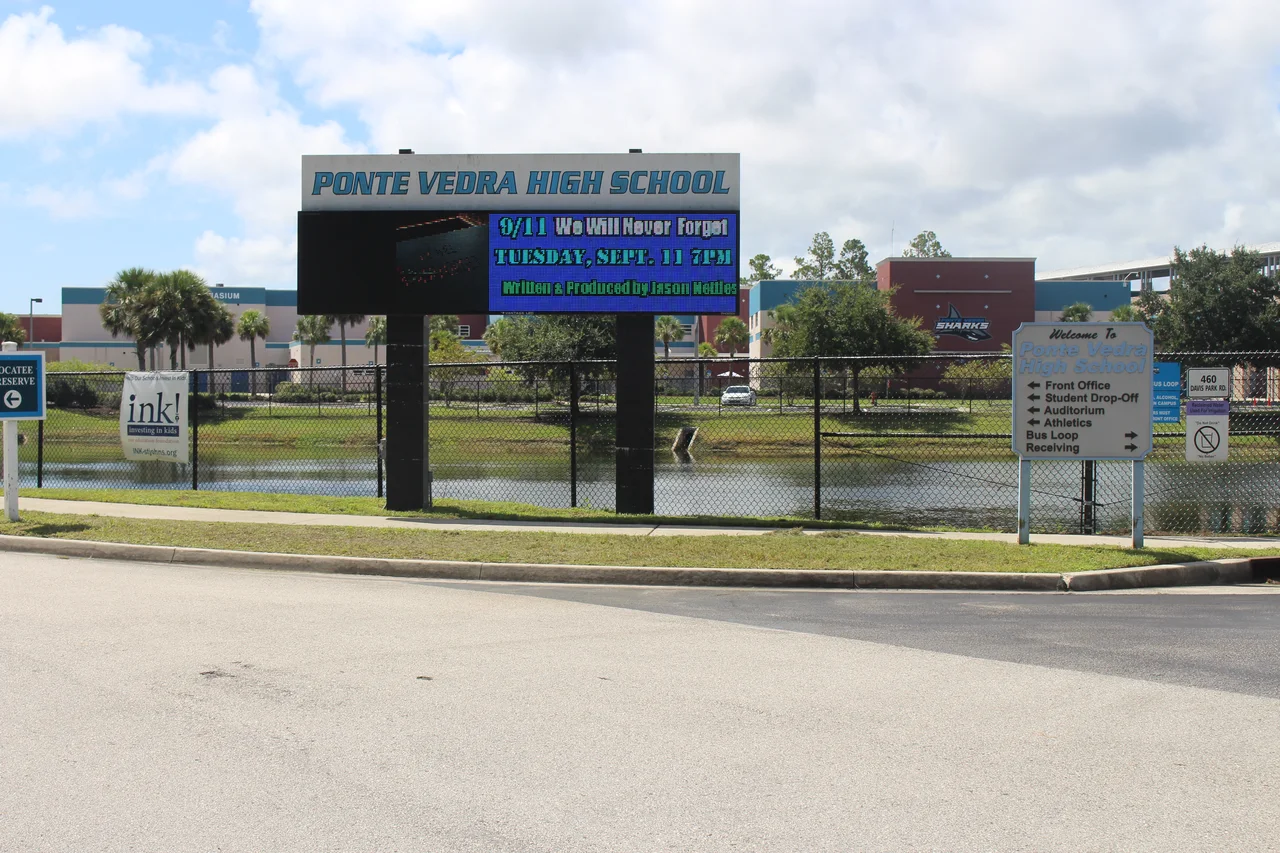
Coastal neighborhoods. Agricultural roots. Schools and public services. A clearer understanding of county decisions starts with the places they affect.
Photographs document these places at the dates shown. They do not identify enclave applicants, establish eligibility or indicate a proposed service cut.
01 / EVERY FILING, IN PLAIN TERMS
Every filing. Its own evidence.
Sixteen filings, including withdrawals and refilings; not sixteen approved developments. One line on each, then the full record a click away.
*The Sept. 15 votes on AFI and North Palm Valley are documented in draft minutes submitted for Oct. 6 approval; the Sept. 28 Heritage reversals are reported in contemporary news coverage. Signed final orders were not yet reviewed.
02 / EVIDENCE REGISTER · FOR STAFF, ATTORNEYS AND REVIEWERS
Every finding. Its evidence and limits.
142 findings across 16 filings, each tied to one of 30 review questions drawn from the statute. A finding is a documented fact, a disputed question or a gap in the record; it is not a verdict, and the count is not a tally of failures.
How to read it. Filter by filing or by review question. Each finding shows what the record says, our assessment, what would resolve it, and its citations. Five filings rest on full hearing packets; the seven pending filings rest on the portal, ordinances and the Coalition GIS screen (35 findings and 41 perimeter calculations added Oct. 1); four withdrawn filings have portal records only. Linked consequences are grouped so one problem is not counted several times.
Research current through October 1, 2026. A later document, hearing packet or court ruling may change a finding; changes are logged in Updates and corrections.
CLAIM REVIEW · PROPOSED STANDARD
One standard. Every speaker.
Check the statement, its context and its evidence. Keep factual accuracy, legal uncertainty and intent separate.
Attorneys, staff, administrators, commissioners, citizens—and this Coalition. The same evidentiary rules apply. The examples below demonstrate the system; none is attributed to a real speaker.
The rating scale and what it does not measure
The numbers describe factual support, not honesty, intent or a probability of winning in court. They must not be averaged into a personal reputation score.
Omissions, knowledge and intent
Identify the omitted fact, explain how it changes the reasonable takeaway, and evaluate context. Purpose requires separate evidence. A false statement is not automatically a deliberate lie.
Our proposed review and corrections procedurePrepare a claim-review record
Draft in this browser, then export to keep your work. Nothing here is sent to a speaker or published. Unsaved entries are lost when the page reloads. Imported approval checkboxes are reset.
KNOW YOUR COUNTY
Five districts. One St. Johns County.
Explore the county commission districts, then use the County’s address lookup for your location.
Commission districts are different from school attendance zones, municipal boundaries and utility service areas. This overview does not establish parcel boundaries or SB 686 eligibility.
Source: St. Johns County GIS Division · retrieved October 1, 2026. Service reports data last edited February 7, 2025. Source record · Official layer
02 / READ THE RULE
Several routes. Shared requirements.
Passing one perimeter alternative is only part of qualification. Ownership, agricultural use, acreage, services and other applicable requirements remain.
Roads, water, parcel exclusions and the CIE
What the law says
The perimeter provision expressly looks to adjacent parcels across a right-of-way, body of water or canal. An enclave need not be enclosed on every side. The law provides separate service and urban service area tests.
What it leaves unresolved
No express universal crossing-distance limit, projection method or rule requiring every commonly owned parcel to be included was identified in the enacted text. These omissions are not permission to skip ordinary intervening land or invent a boundary methodology.
Glossary of statutory and official terms
03 / A SEPARATE FISCAL QUESTION
Amendment 3 is not SB 686.
The homestead proposal creates the modeled revenue reduction discussed here. SB 686 governs agricultural enclaves. Their fiscal effects must be measured separately.
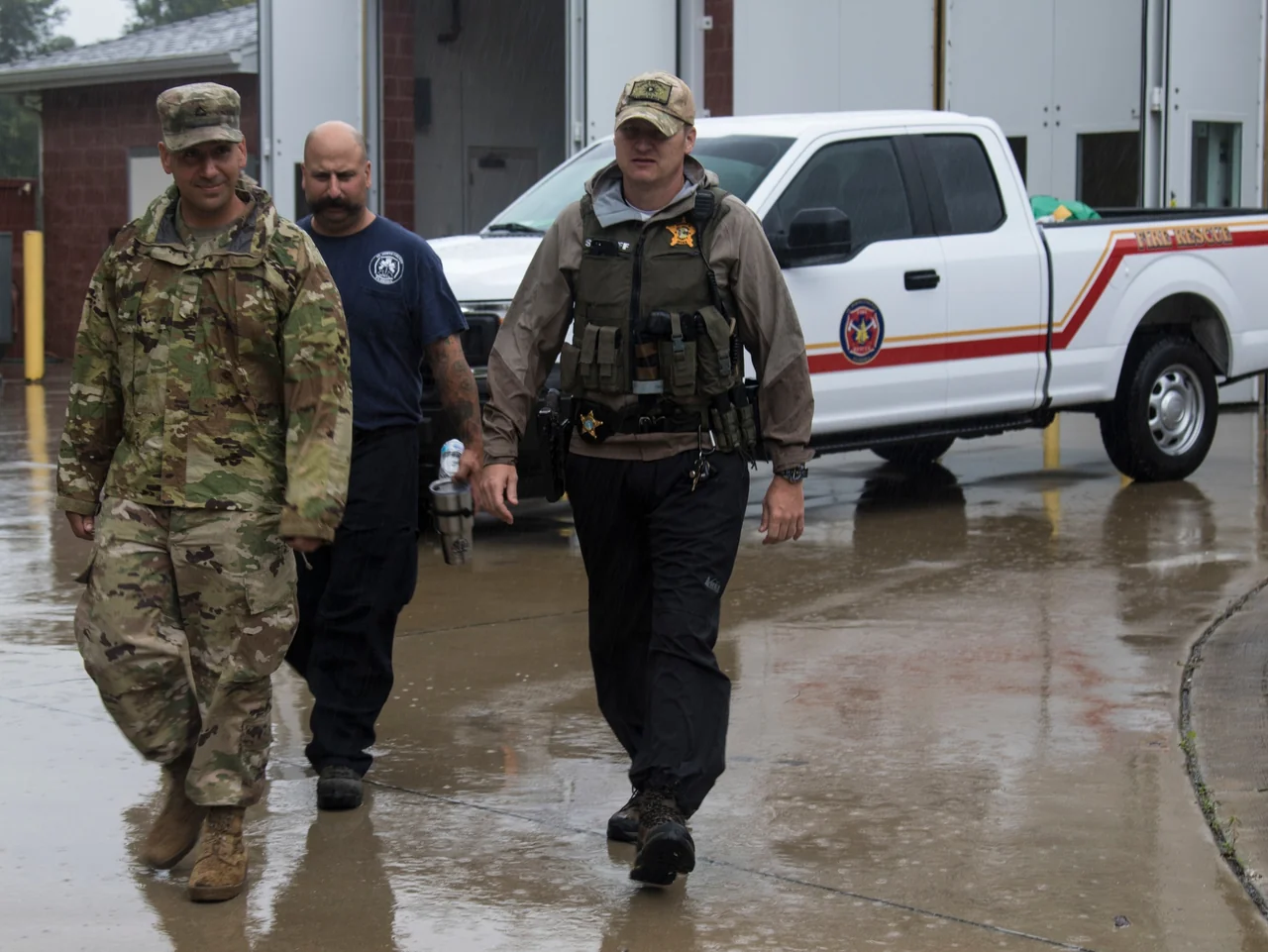
Hurricane Dorian site survey, Ponte Vedra · September 4, 2019. Left to right: Florida National Guard Pfc. Michael Davis, St. Johns County firefighter John Baccari and Sheriff’s Office Detective Josh Gordon. U.S. Army photo by Sgt. Leia D. Tascarini / DVIDS. Source & usage details
The appearance of U.S. Department of War (DoW) visual information does not imply or constitute DoW endorsement.
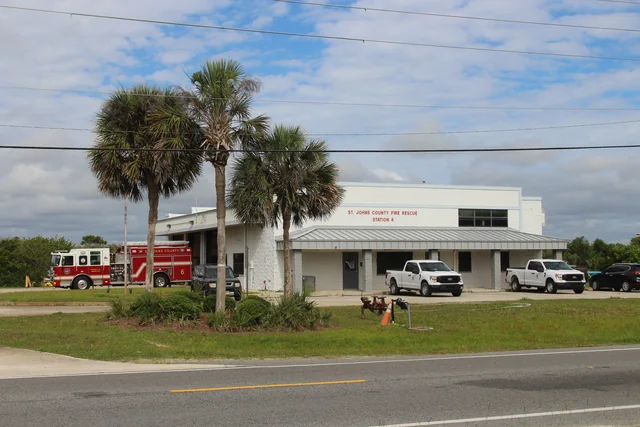
THE PEOPLE BEHIND PUBLIC SERVICES
Serving our neighbors. Every day.
Budgets determine how services are funded. The analysis below separates documented county actions, conditional forecasts and our decision framework.
Photographs provide local context; they do not indicate a proposed closure or cut, or endorsement of this project.
Official conditional forecast
Modeled county revenue reduction
If Amendment 3 passes. Annual reductions against the no-amendment baseline, not cumulative annual additions.
Our assessment · based on announced measures
Likely near-term responses
Defer capital projects and proposed expansion.County announcements document project holds and staffing measures. A project hold is not permanent annual savings.
Review user fees and cost recovery.A review of 1,137 fees was announced. Specific Amendment 3-related increases and yields are not established here.
Study benefit-based assessments.The county identified a service-benefit-unit study. A charge needs a lawful basis and defensible allocation.
Decision framework · value judgment
Fair to whom?
Protect essential service outcomes, verify recurring savings, then compare who bears each replacement cost. No option is burden-free.
Explore a budget bridge without inventing revenue
Your inputs below are hypothetical annual amounts, not county proposals or revenue estimates. Restricted revenues cannot automatically fill a General Fund gap.
FOLLOW THE RESEARCH YOURSELF
Tools for an informed opinion.
Evidence leads, calculations and confidence labels each have a specific purpose. None is an official certification.
EXAMINE A CLAIM
Same standard. Every speaker.
See how source quality, context and uncertainty shape a fair fact check. Examples are clearly labeled illustrations.
Drop a hearing packet from the Clerk's site into this page to read it, search it and work through the 30 review questions in your own browser. Nothing is uploaded anywhere; this is a reading aid, not a certification.
Local reader available
Bring the complete record
Add an ENCERT packet and any supplements. Files stay in your browser and are not uploaded to The 1565 Coalition.
Maps and signatures still require visual checking. OCR may take several minutes. Keep this tab open.
Evidence explorer
No pages loaded
01 02 03
Read. Reconcile. Review.
Each page keeps its source file and PDF page number. Missing text remains a visible gap.
Packet confidence worksheet
Automatic extraction statistics and source-page leads appear after reading. Merits findings start as not reviewed; keyword matches do not establish eligibility.
Thirty review questions include alternative routes and procedural checks. Export before adding or clearing files; a changed packet resets these findings. Confidence is a category with a rationale, never approval odds.
How packet confidence is determined
What the reviewer may and may not conclude
“Cannot qualify on the submitted facts” differs from “could never qualify.” A failed alternative route, absent document, staff typo or disputed interpretation must not be presented as an incurable legal defect. See Appendix C of the report for the full protocol.
UPDATES AND CORRECTIONS
What changed, and when.
Every edition is dated. Material corrections are listed here and left visible; nothing is silently rewritten.
Oct. 2, 2026 · precision review
Amendment 3: the County's $8.6M in positions, $100M in held projects and $30M reserve are now described in the County's own terms, as measures under review; the report no longer treats them as recurring savings or as a bridge for the operating gap (report version 1.1; version 1.0 kept). Citations now link to the exact EDR document and page, the County's own announcement and the specific Property Appraiser documents. Report 03: the urban-service definition is described as a potentially decisive threshold for four filings, not the whole test; the Osceola North comparison with King is corrected; Adler Creek and Star IV figures are labeled "Scenario only; filed boundary not reviewed." The About page now says how the work is prepared and that it has not had independent outside review. Internal working documents (the Sept. 30 pre-publication audit and register, the records-retrieval addendum and the draft claim-review standard) were withdrawn from public download; the evidence inventory PDF no longer carries its draft "review copy" header.
Oct. 2, 2026
Portal check: the County recorded its report on Carter Road (ENCERT 2026-11) as emailed to the applicant on October 1; the report is not public. No report is recorded yet for Adler Creek, Star IV or Pacetti Oaks. Report 03 now states the four Nov. 30 default-date filings and their 906.5 acres, and uses the same status ledger as this page (1 standing, 3 denied, 5 withdrawn, 7 pending). Report 03 is now version 1.1; version 1.0 remains available. Homepage deadline card reworded: a default certification is not a finding that a site qualifies.
Oct. 1, 2026 · evening
Site update after beta review, no change to findings. Interest disclosures moved to the top of every report and this page. Reuse terms published (CC BY 4.0, name and mark reserved) and a version line added to every PDF. The Amendment 3 report PDF moved to /research/downloads/ (the old address redirects). Contact address is now hello@the1565.com. Unpublished working files were removed from the site.
Oct. 1, 2026
Report 03 published: the seven pending filings screened from the portal, ordinance record and a Coalition GIS perimeter screen, with maps. 35 findings (E10–E16), 41 perimeter calculations and 21 sources added to the register. Research center re-written in two layers: plain-language front, evidence register behind. Draft and "prepublication" labels retired; the findings now stand as Coalition research. An experimental reviewer tool was removed from the public site.
Sept. 30, 2026
Prepublication evidence audit: 42 claims, all 16 filing statuses and nine calculations re-checked against the record; the Heritage West narrative denominator and affidavit-copy issues documented.
Sept. 28, 2026
Heritage East and West reversals recorded from contemporary coverage; signed orders pending.
Sept. 15, 2026
North Palm Valley denial and AFI approval recorded from draft minutes.
To report an error, write to hello@the1565.com with the page and the source. Corrections that change a finding are noted in the finding itself and here.
Datasets: GIS perimeter screen data (JSON), the evidence and audit workbooks above, and the register behind this page are free to view and check, not to republish or build on. Terms
Methodology and corrections
This edition reviews nine complete agenda packet PDFs covering five distinct applications, all sixteen portal filing records, selected hearing minutes and state legal and fiscal materials. It does not claim a licensed survey, complete court-docket examination or independent authentication of every exhibit.
The record review edition corrects AFI’s previously unresolved grouping, identifies the distinct Heritage routes, adds Sandy Creek’s preliminary deficiencies and later forestry materials, and separates draft September 15 minutes from approved minutes.
There are no automatic updates. Every public result must retain its source, evidence category and research cutoff.
THE 1565 COALITION
Local experience. Public accountability.
Research under the byline of Justin Tahilramani
The Coalition focuses on how county rules, fees and review processes affect residents and small businesses. Its commitment here is nonpartisan: document the rule, inspect the evidence, explain the tradeoffs.
Justin’s background includes Army contracting and acquisition and county procurement work. A February 2023 county record identifies him as Senior Procurement Coordinator. This experience informs questions about process and public spending; it is not a claim of legal, surveying or doctoral credentials.
Independent of St. Johns County government. The report includes the author’s fuller biography and perspective disclosure.
VOLUNTARY COMMUNITY SUPPORT
Help keep the record accessible.
Support the 1565 Coalition’s continued development and maintenance of this site: hosting, document tools, source updates and careful public research.
Reading, downloading and checking the research is free. Contributing is always optional.
Evidence stays independent.
Contributions do not buy a favorable finding, influence a rating, move a packet ahead in the review queue or provide greater access to public research. The same standards apply to everyone.
Contributions are not yet open. Payment details will appear here when the recipient and disclosures are ready.
Tax deductibility has not been established. This site does not claim that contributions are tax-deductible.
This site does not collect payment-card details or publish donor names. A connected payment provider will handle payment information under its own terms and privacy policy.